
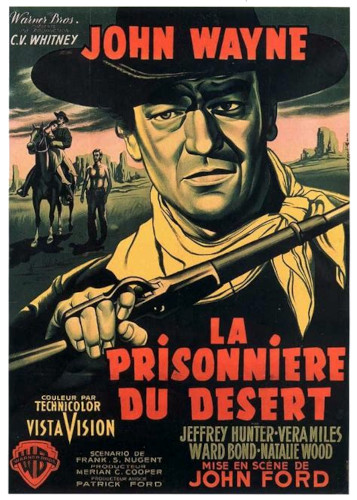
John Ford’s “The Searchers” contains scenes of magnificence [and] shots that are astonishingly beautiful […] And yet at its center is a difficult question, because the Wayne character is racist without apology — and so, in a less outspoken way, are the other white characters. Is the film intended to endorse their attitudes, or to dramatize and regret them? Today we see it through enlightened eyes, but in 1956 many audiences accepted its harsh view of Indians […] In “The Searchers” I think Ford was trying, imperfectly, even nervously, to depict racism that justified genocide; the comic relief may be an unconscious attempt to soften the message. Many members of the original audience probably missed his purpose; racism was invisible to them, because they bought into his view of Indians. Eight years later, in “Cheyenne Autumn,” his last film, Ford was more clear. But in the flawed vision of “The Searchers” we can see Ford, Wayne and the Western itself, awkwardly learning that a man who hates Indians can no longer be an uncomplicated hero. — Roger Ebert
 Pop9
Pop9 